Old Repairs
Lifted Patch Edges
- You See
- Patches with curled corners and dirt lines underneath.
- What It Means
- Patches laid on dirty or unprimed membrane let go at the edges. They come off and get replaced on clean, primed membrane.
Lawrenceburg commercial roof repair on older roofs means sorting good patches from failed ones, repairing the openings, and leaving the owner a dated record.
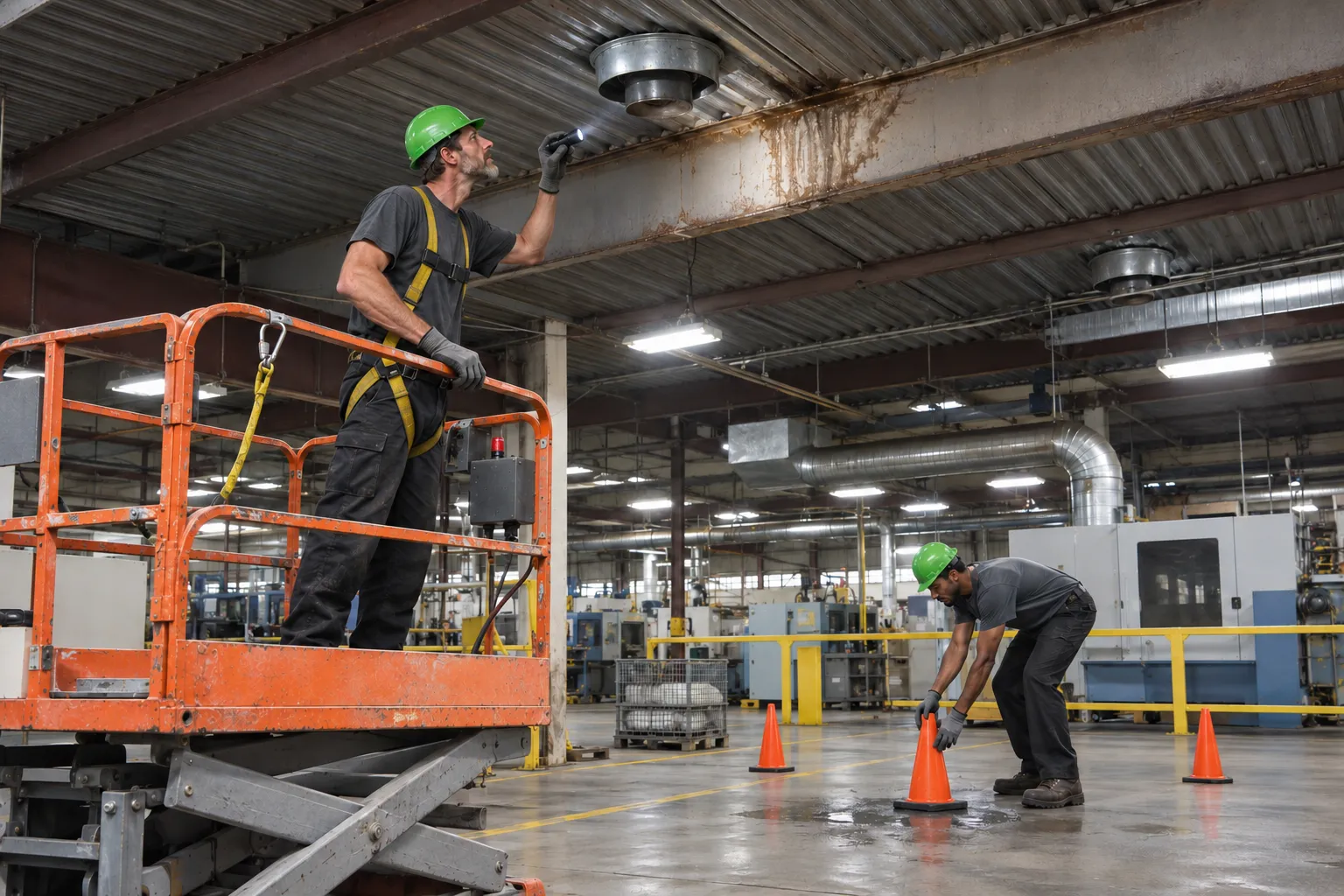
Lawrenceburg commercial roof repair on industrial and warehouse roofs often starts with a roof covered in patches from earlier contractors.
Old patches tell part of the story. Some still hold tight, others lifted at the edges years ago, and a few were sealant smeared over an opening nobody traced.
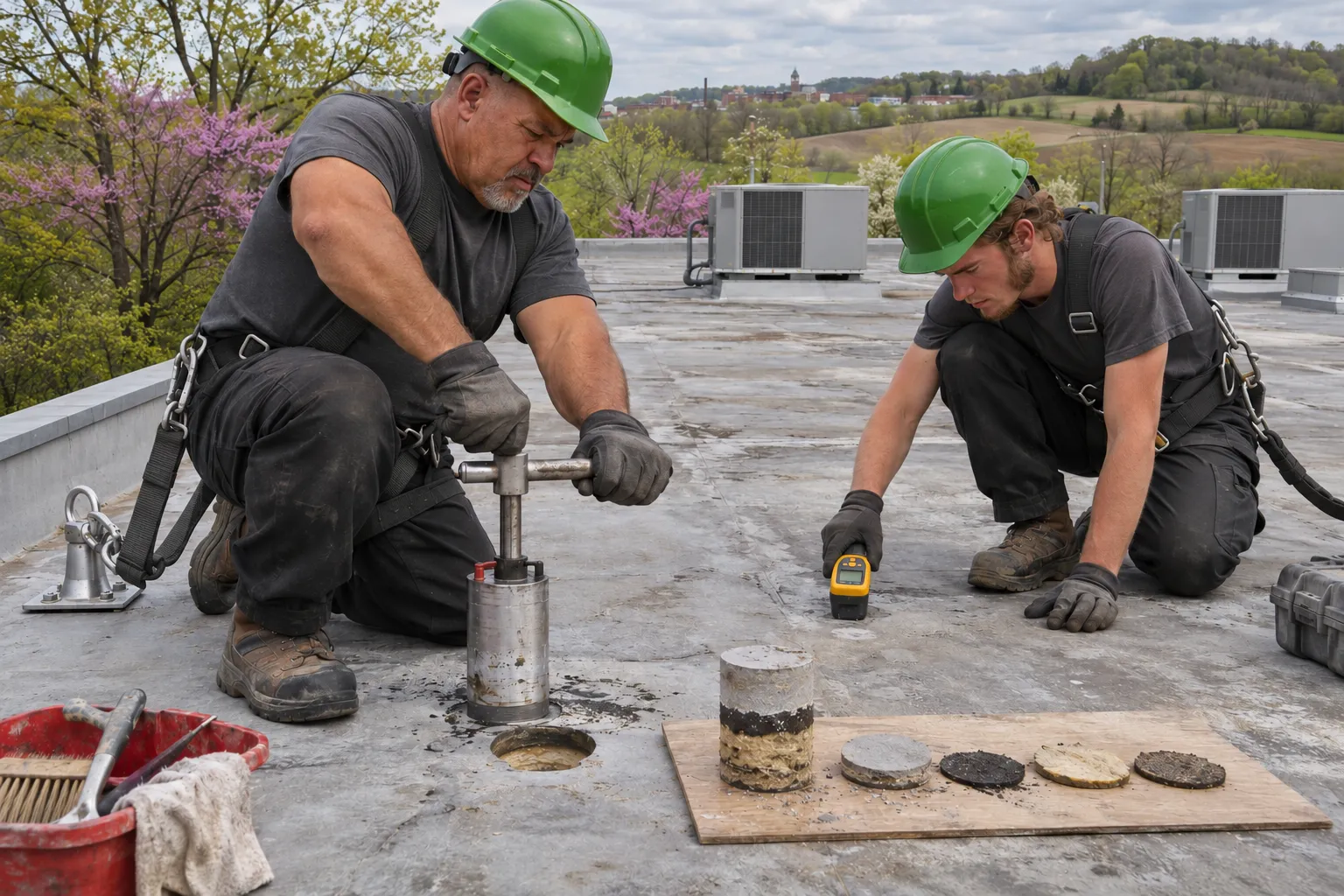
We test patch edges, read moisture under the worst ones, and replace the failures. Each repair gets photographed, dated, and added to a log the owner keeps.
Roofs with a long repair history fail in their own ways, mostly at old repairs.
A written history turns every future repair into a quicker, cheaper job.
Each new roofer sees what was fixed, where, and when.
Before and after photos settle questions with tenants and insurers.
Removing bad repairs stops them from hiding new leaks.
Cutting out wet insulation under old patches protects the deck.
Logged repairs narrow the search when the next stain appears.
A pattern of repairs shows when replacement planning should begin.
Extended drains end the ponding that years of layers created.
Refastened edge metal stops wind from peeling the membrane.
Repairs on older roofs follow four steps, from sorting old work to recording new work.
Patch edges get probed, and the ones that lift come off along with any sealant that never stuck to the membrane.
Moisture readings mark the wet boards. They come out, and new insulation and cover board go in before membrane closes the area.
New patches go on clean, primed membrane with matching material, welded or adhered to the roof system already in place.
Dated photos and a short description of each repair go into a log the owner keeps with the building file.
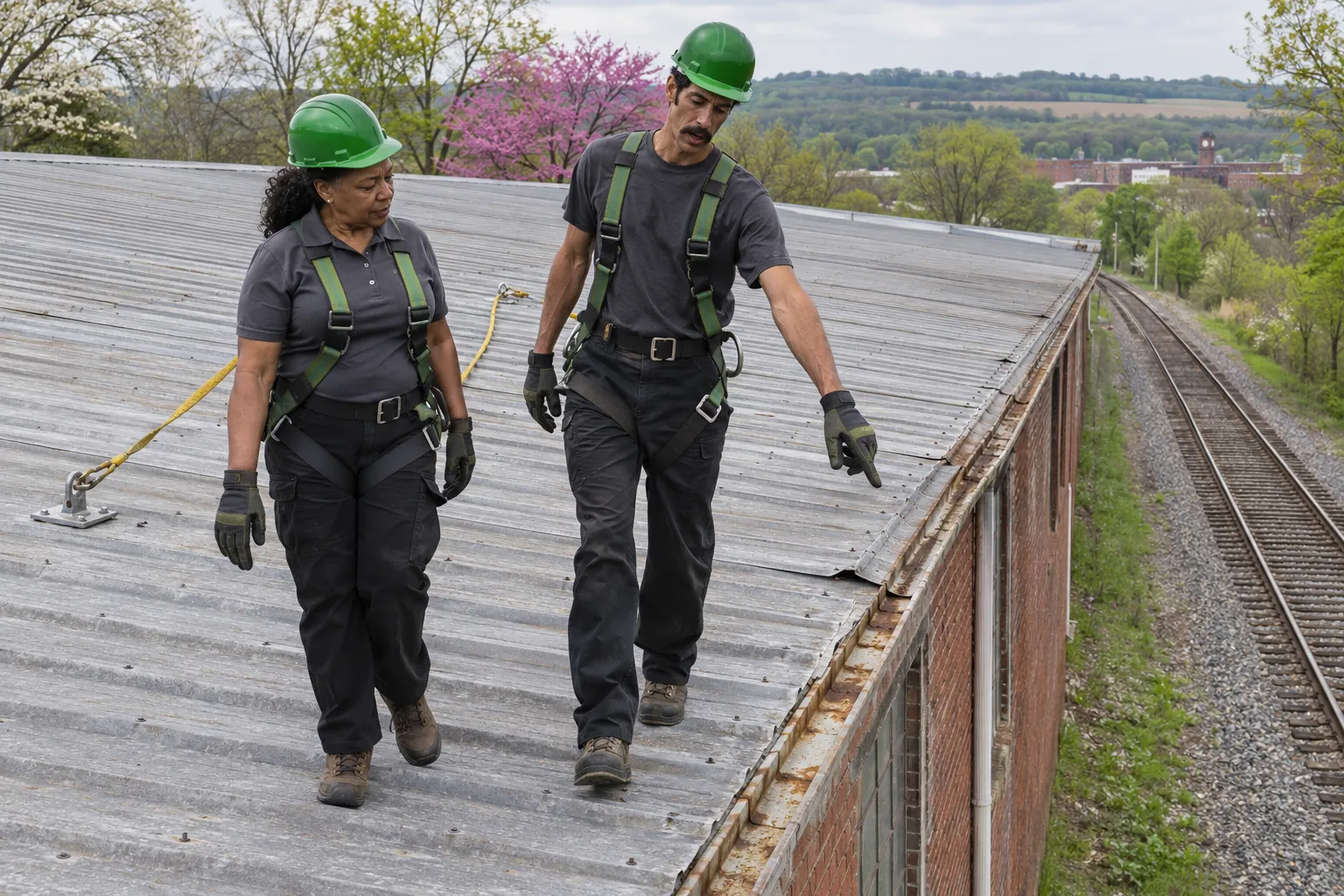
Send a photo or two of the roof surface. We will sort the working patches from the failed ones on a roof walk.
Get An EstimateOlder roofs need a little detective work before any repair begins.
Any invoices, warranties, or notes from earlier roofers help us understand the layers before going up.
Each patch, sealant smear, and replaced section gets marked on a sketch and photographed.
Readings around suspect patches show where water got trapped by earlier repairs.
You choose which failed patches and wet areas to fix now, with a price for each.
Failed work comes off, matching repairs go on, and the dated log grows by one entry per repair.
Wondering about a building in a neighboring town? We cover the towns below; elsewhere, call us or send us a message.
Plant and warehouse campuses with several roofs to keep dry.
Repairs get planned building by building.
Connersville commercial roof repairChurches, schools, and offices with roofs over occupied rooms.
Work dates fit services, classes, and office hours.
Rushville commercial roof repairFlat roofs crowded with skylights, hatches, and pipe penetrations.
Each opening gets its own flashing check.
Winchester commercial roof repairBuildings where a metal roof meets a flat roof section.
The transition flashing gets close attention.
Greendale commercial roof repairWhat owners of older industrial and warehouse roofs ask.
Lawrenceburg is one of our five towns, and its industrial and warehouse roofs get drain, curb flashing, seam, and fastener repairs planned around operations, with a written record handed over.
Old roofs cost more when failed patches hide wet insulation. The price depends on how many patches must come off, how much insulation is wet, and the roof system, all shown in the written estimate.
Ask for one who tests old patches instead of sealing over them, and who hands over dated photos. A roofer who records the work makes every later repair easier.
A patch laid over wet insulation keeps the water in the boards, where it spreads sideways. The ceiling below stays dry for a while, then a stain appears somewhere new, far from the old repair.
The photos and log go to you after each visit, so they stay with the building no matter who works on the roof next. We also keep a copy for our own follow-up visits.
Only the failed ones. Patches that still hold tight to clean membrane stay, and we note them in the log so the next roofer knows they were checked.
Gladly. Earlier invoices, drawings, or warranty papers speed up the inspection and help us avoid undoing work that still holds.
Tell us about the roof and any old repair records. We will sort the patches, fix the failures, and start your log.