Repair Fits When
- Leaks cluster around fans, stacks, or pipe supports
- Expansion joints opened in one or two runs
- Drains and sumps back up in known spots
- Residue softened membrane near one exhaust
- Walkway paths wore through to the membrane
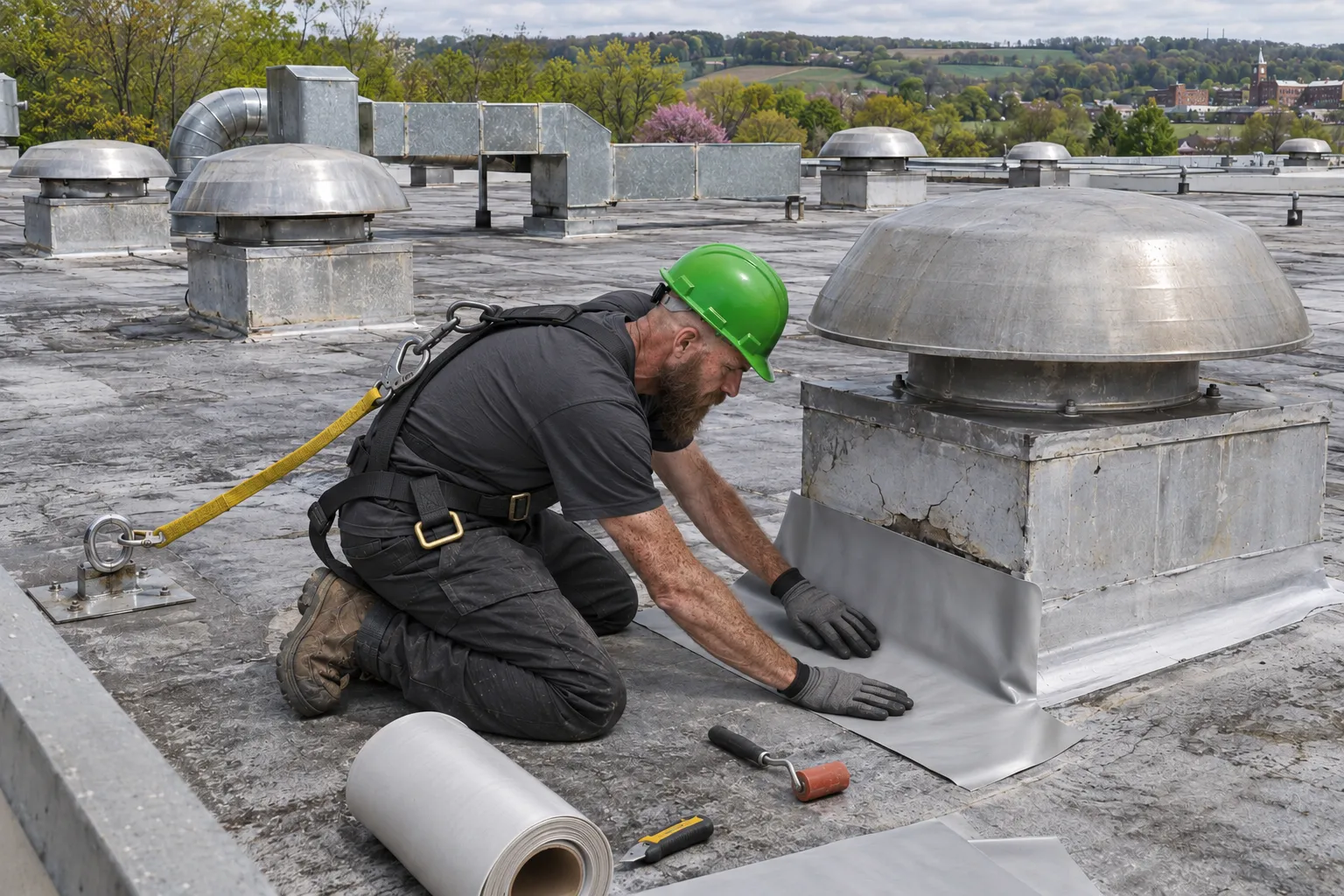
As a Richmond industrial roof repair contractor, we repair fan curbs, stacks, pipe supports, expansion joints, and drains on plant and warehouse roofs.
Richmond industrial roof repair suits plants and warehouses with local damage around equipment, drains, and joints. These lists show the line.
Plant roofs wear from the inside out as much as from weather. These are the conditions we repair most.
Industrial repairs group by where the roof meets the plant: equipment, joints, drains, and the full roof walk.
Curb flashing gets stripped back, rebuilt to a proper height, and sealed, with residue-resistant membrane where exhaust lands on the roof.
Joint covers get replaced and tied into the field membrane, and pipe supports get new pads or stands so they stop cutting the roof.
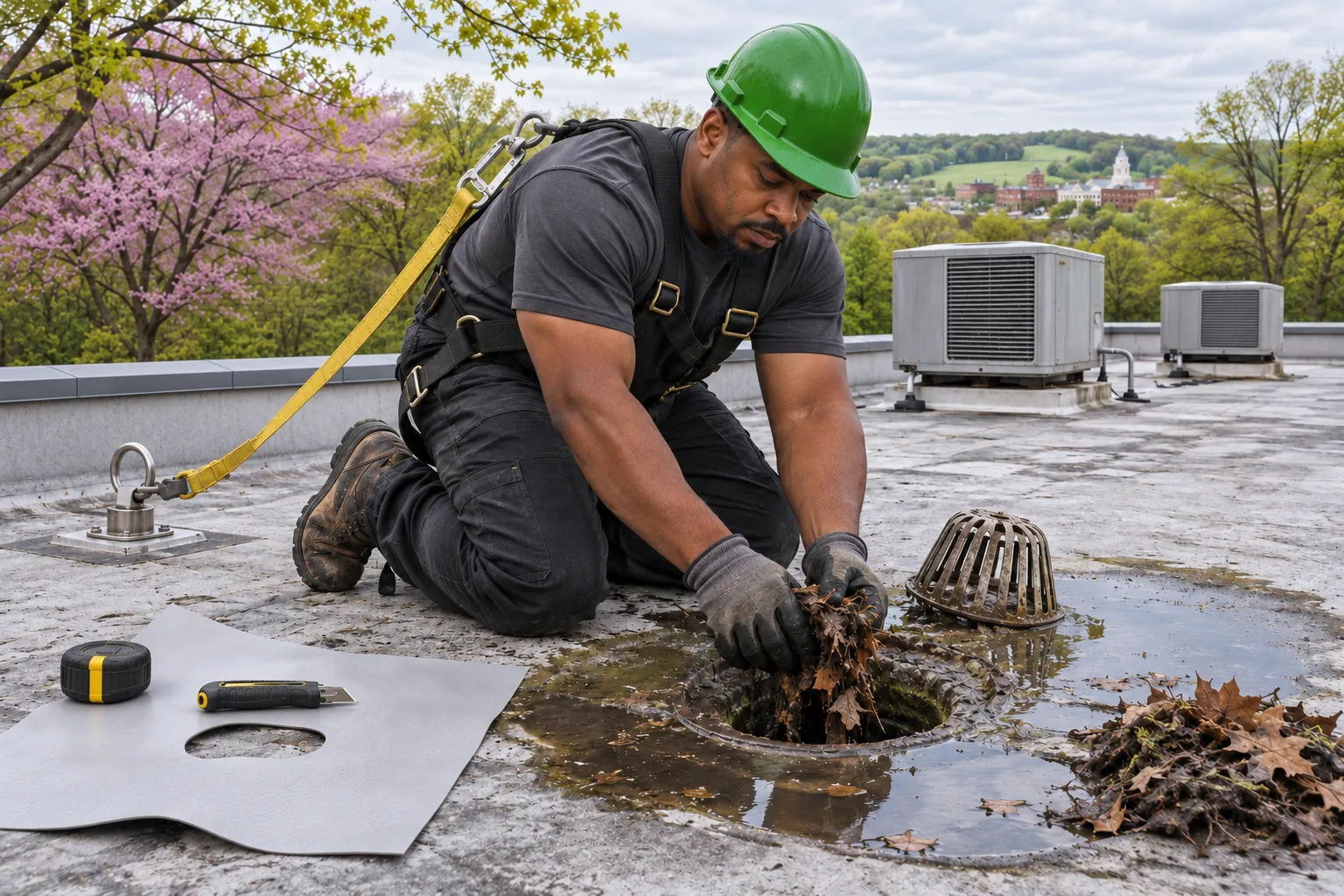
Sumps get cleared, bowls resealed, and clamping rings reset, with crickets added where water ponds short of a drain.
Spring and fall visits clear drains, check curbs and joints, and patch service-path damage before it reaches the insulation.
A dry plant roof protects machines, stock, and production schedules underneath it.
Repairs planned around shifts keep production moving under the roof.
Closing openings over equipment keeps water off controls and motors.
Residue-resistant flashing at fans lasts longer than standard sealant.
Cleared sumps keep water from backing up under flashing on long roofs.
Dry insulation keeps steel deck from rusting above the plant floor.
Dated photos give plant managers a record for budgets and audits.
Walkway pads give service techs a marked route across the roof.
Regular visits catch damage before it turns into a shutdown leak.
Water over machines can stop a line. Tell us where it drips and when the plant can allow roof work.
Get An EstimatePlant repairs need coordination below as much as work on top, so the lanes trade off.
We go over shift times, shutdown windows, hot work rules, and which areas below need protecting.
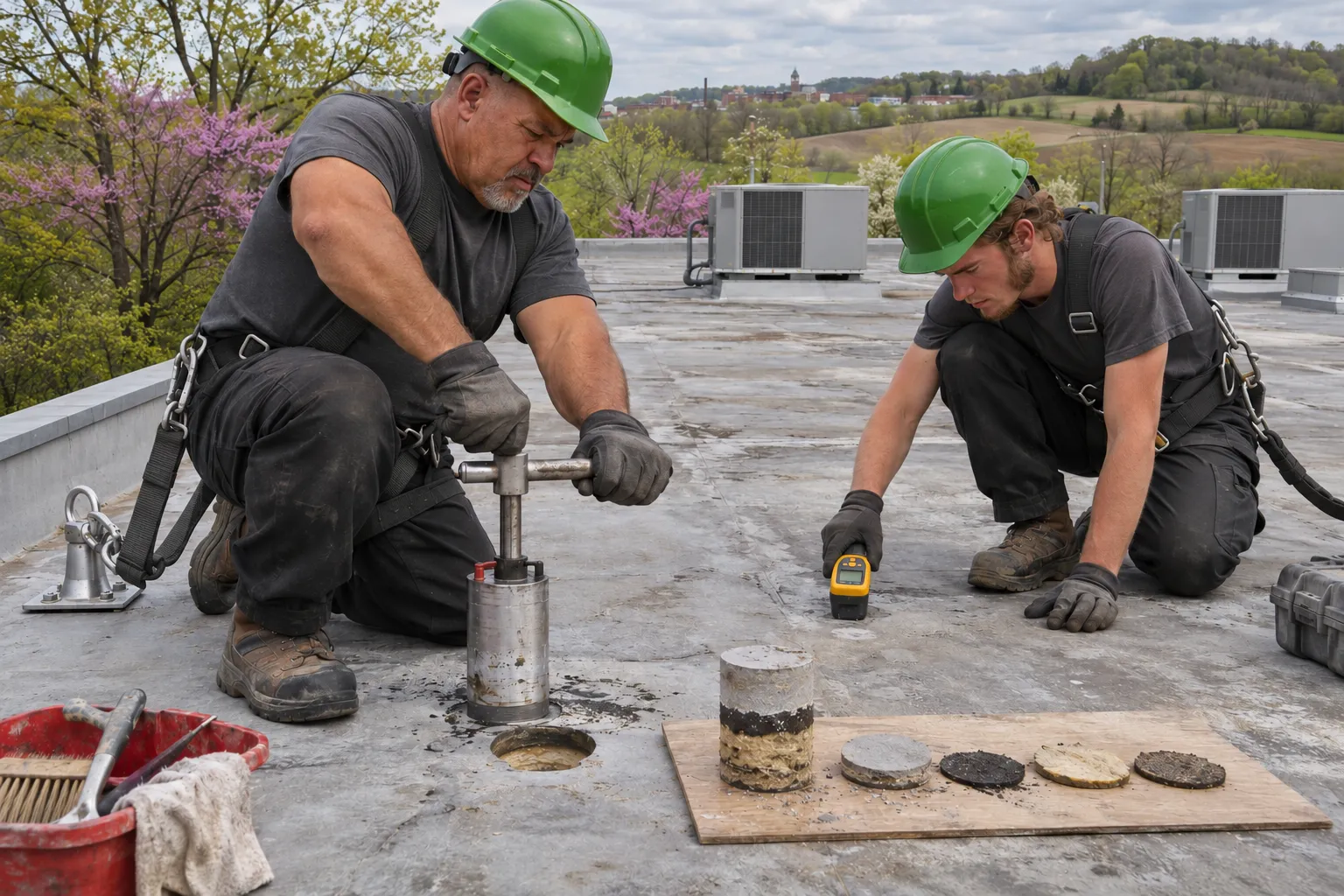
The whole roof gets walked: membrane or panels, curbs, stacks, joints, drains, and walkways, with photos of each defect.
You get a priority list with prices, from openings over production to items that can wait for the next season.
Fans shut down when agreed, curbs and joints get rebuilt, and drains get cleared and resealed in the window you set.
Repairs get rechecked after rain, and the photo log goes to the plant for its maintenance file.
Plants often have office wings, metal additions, and hidden leaks. These repairs cover them.
Office wings and low-slope sections where drains, seams, and blisters cause the leaks.
Flat roof repair in Richmond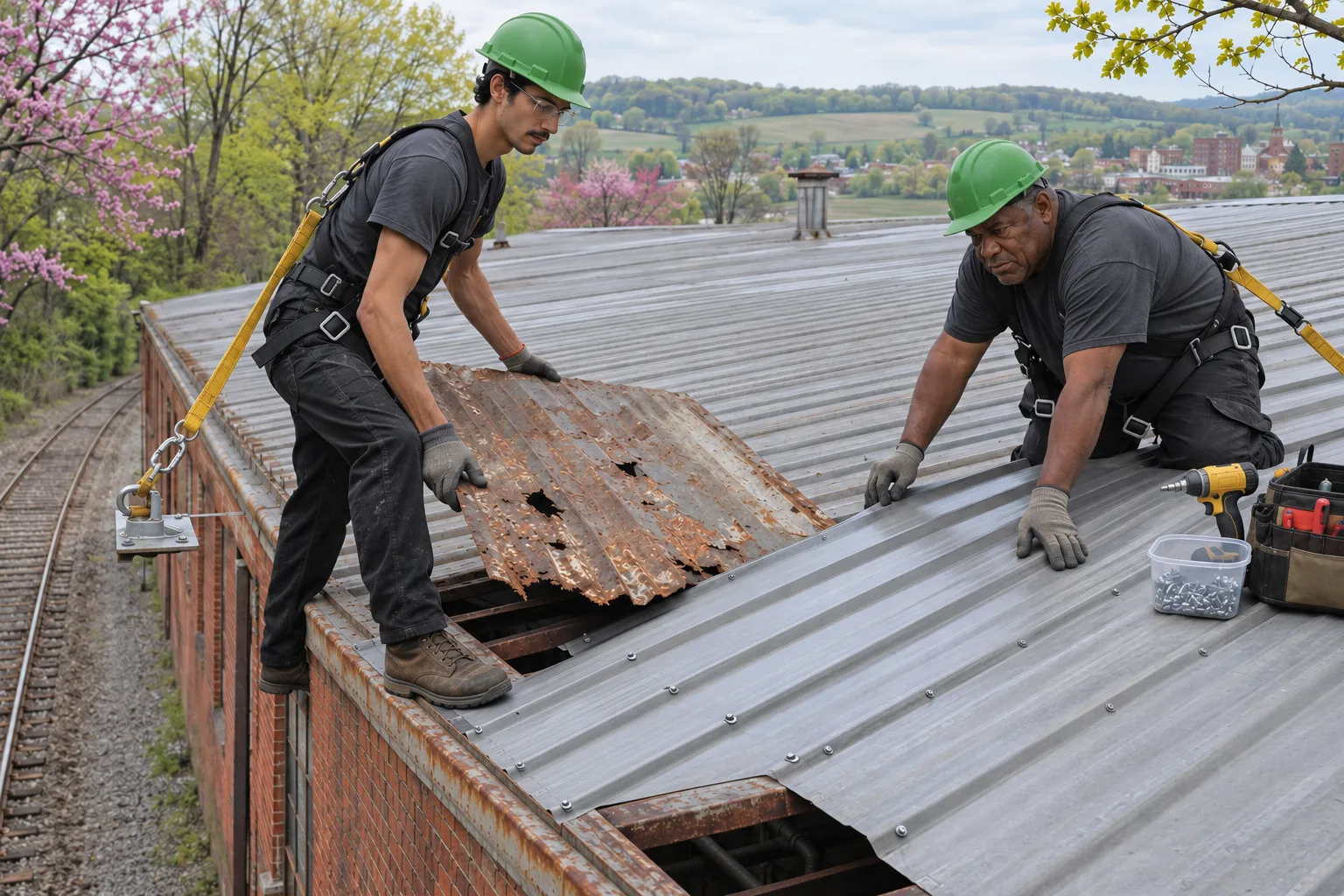
Metal warehouses and additions with backed-out screws, open laps, or rusted panels.
Commercial metal roof repair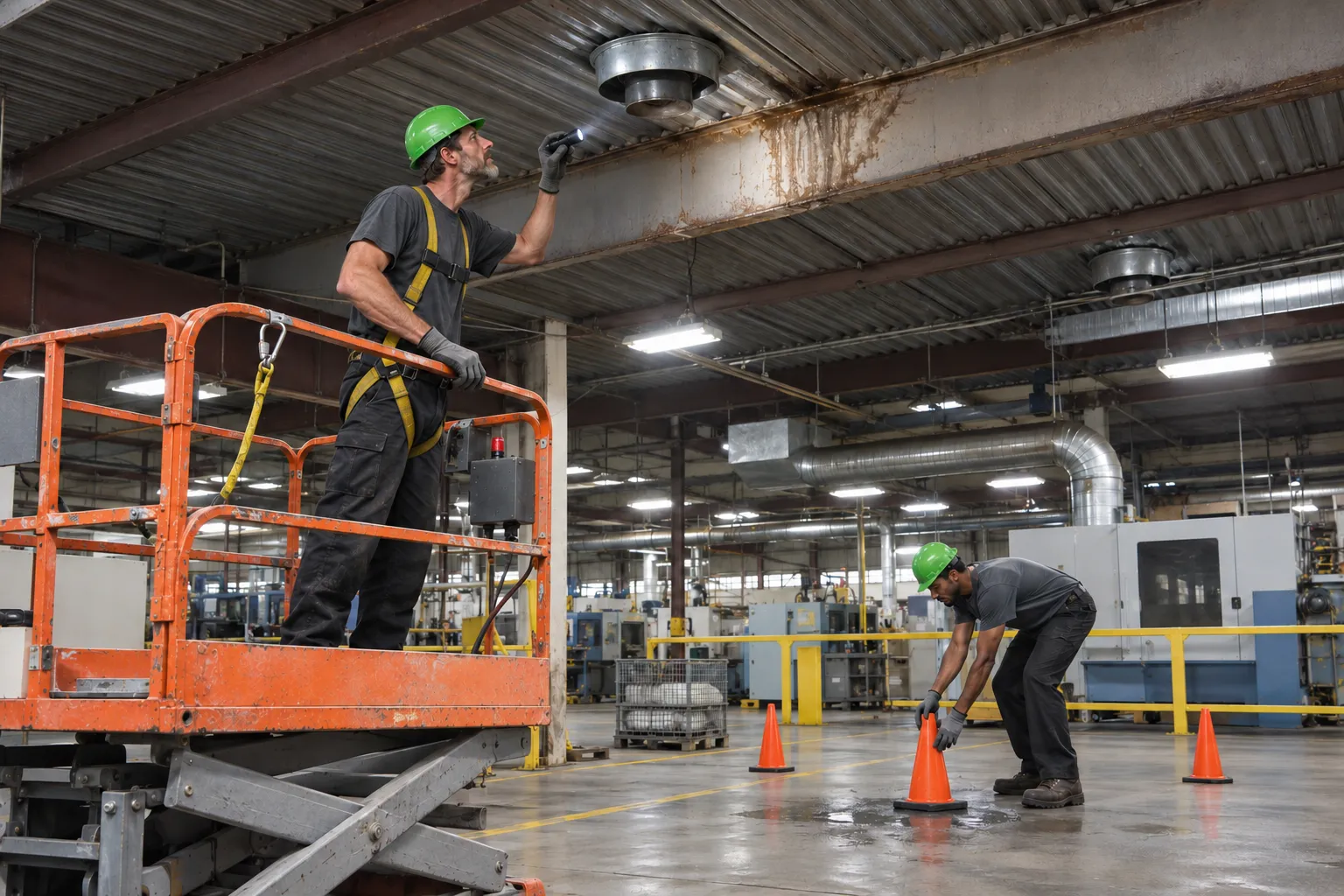
Drips over the plant floor, where water runs along deck and purlins before it falls.
Commercial roof leak repairQuestions plant managers ask before roof work over production.
Most can. Membrane and flashing work happens up top while lines run below, and only fan shutdowns or work over sensitive equipment need a planned window.
Twice a year, in spring and fall, plus after major storms. Plants with heavy exhaust or frequent rooftop service visits benefit from checks around those visits too.
Cleaning off residue, stripping failed curb flashing, securing the fan base, and installing new flashing plus a protection layer that resists heat and grease.
Yes. We follow the plant hot work permit process for torch or heat-welding work and use cold-applied repairs where open flame is restricted.
Gladly. Many plants have their own crew clear drains, and we handle membrane, flashing, and joint repairs, sharing photos so both sides know the roof condition.
Two roof walks a year, drain and sump clearing, curb and joint checks, and a note of every service visit that crossed the roof. Adding walkway pads on busy routes cuts the number of punctures we find.
It has to be. Grease and process residue stop new membrane and sealant from bonding, so the area around a fan or stack gets scrubbed and primed before any patch or flashing goes on.
Tell us where the plant roof leaks and when work can happen. We will walk it and rank the repairs.