Repair Fits When
- Leaks show up near one drain, curb, or wall
- Seams opened in a few places along the field
- Insulation reads dry beyond the damaged area
- Blisters are scattered, with firm membrane between them
- Ponding returns to one or two low spots
As a Richmond flat roof repair contractor, we fix leaking seams, clogged drains, blisters, and low wall flashing on TPO, EPDM, PVC, and built-up roofs.
Richmond flat roof repair works best when the damage sits in known areas. Use these lists to see where your roof stands.
These are the flat roof conditions behind most low-slope leaks, grouped by what causes them.
Each flat roof problem has its own repair, and the moisture reading decides how far the repair reaches.
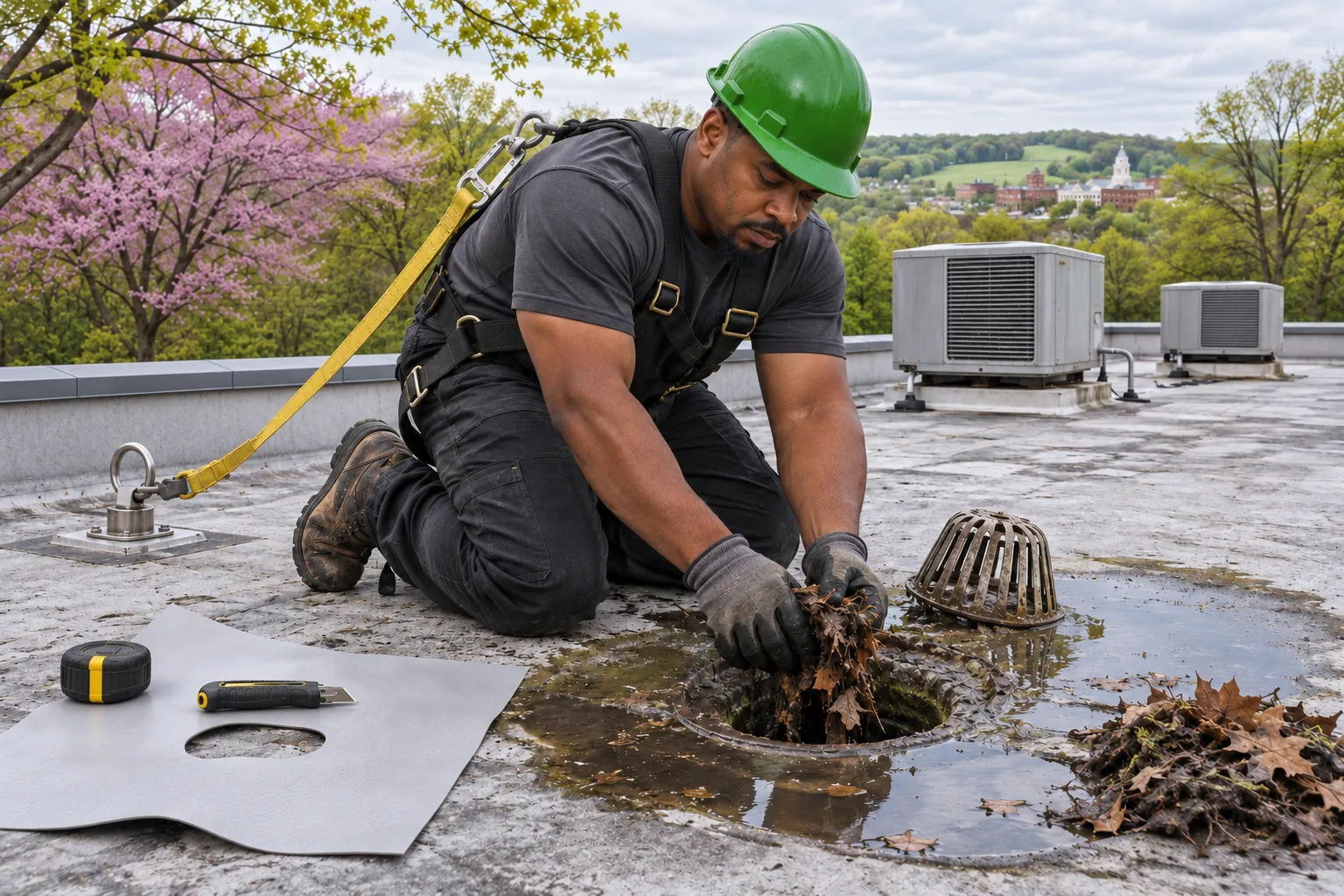
Debris comes out first, then the clamping ring, strainer, and drain body get checked. Where membrane pulled away from the flange, we reset the ring, add a target patch, and reseal it.
Patches hold when the membrane around the damage bends without cracking and the insulation beneath reads dry. If either fails, we cut a larger section and tie new material into dry roof.
Insulation that holds water loses its heat value and rots the deck. Wet boards come out, new boards and cover board go in, and fresh membrane gets welded over the opening.
Old base flashing gets stripped back to solid substrate. New flashing goes up the wall or curb to a proper height, then gets fastened under a termination bar and sealed.
Fixing the drainage and the seam together keeps a flat roof working through Indiana freeze and thaw.
Correcting low spots sends rain to the drains instead of letting it sit against seams.
Closing seams early keeps water from spreading through the boards under the membrane.
Sealed laps give ice nothing to pry open when meltwater refreezes overnight.
Dry insulation means the steel or wood deck under it stays solid underfoot.
A reset clamping ring and clean strainer keep the bowl from leaking at its own seal.
Photos of each patch help with lease talks, budgets, and later inspections.
Rebuilt blisters stop growing once the trapped moisture is gone.
Targeted fixes keep a roof with years left in service instead of tearing it off early.
Water still sitting two days after rain wears out seams fast. We find the low spot and the drain problem behind it.
Get A Free EstimateLow-slope repairs move from drainage to seams to flashing, with a moisture check before any cut.
Leaves, gravel, and debris come out of drains and scuppers so we can see where water actually sits and whether the bowl itself leaks.
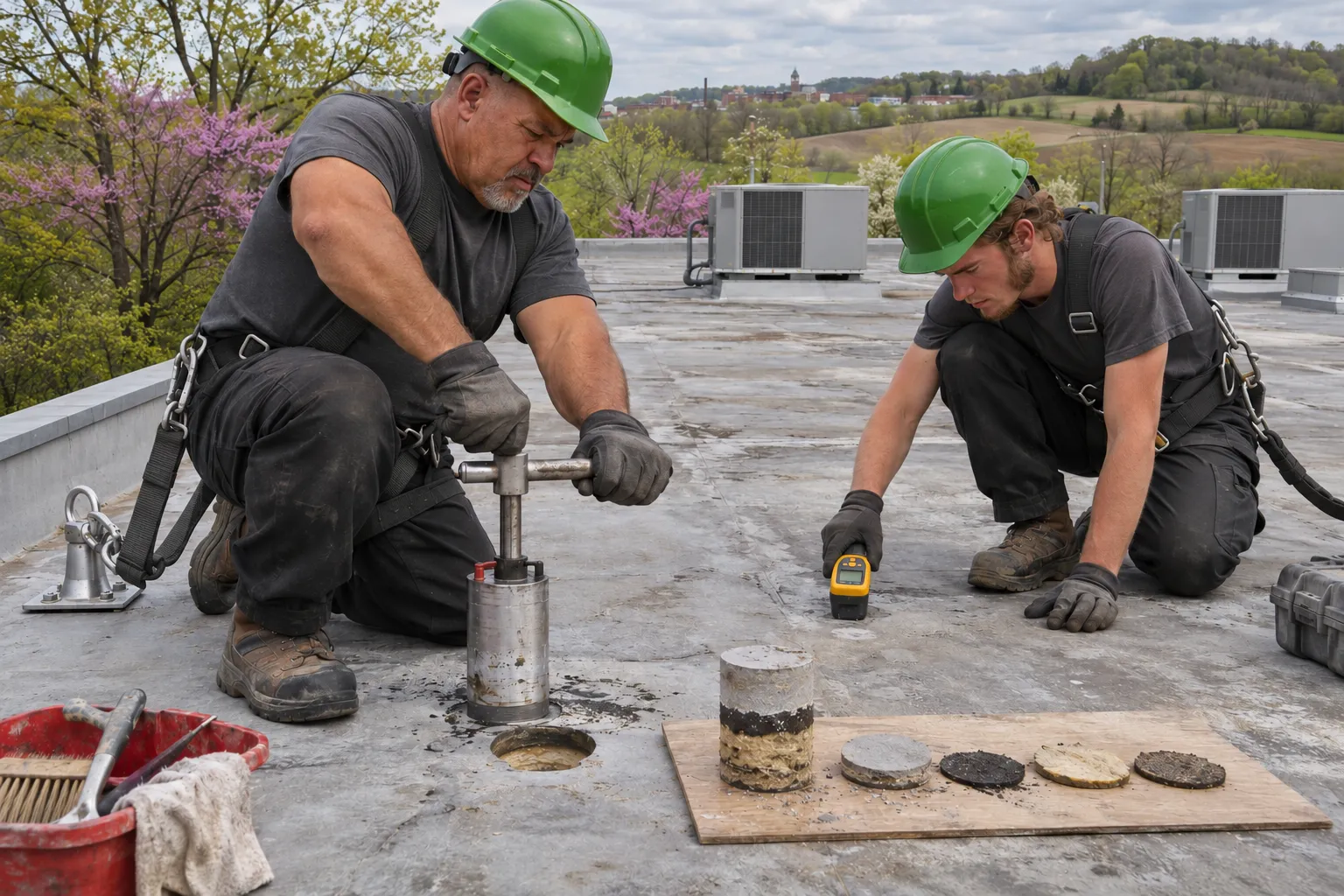
A moisture meter and a few core cuts show where the boards are wet. Those readings set the size of every patch and cut-out.
You see photos of each wet area, open seam, and flashing problem, with a written price before anything is cut.
Wet material comes out, new insulation and cover board go in, and matching membrane gets welded or adhered with lapped seams.
After the next rain we check the repaired areas and the drains, and you get dated photos for the building file.
Flat roofs often sit beside metal sections or carry plant equipment. These repairs cover the rest of the building.
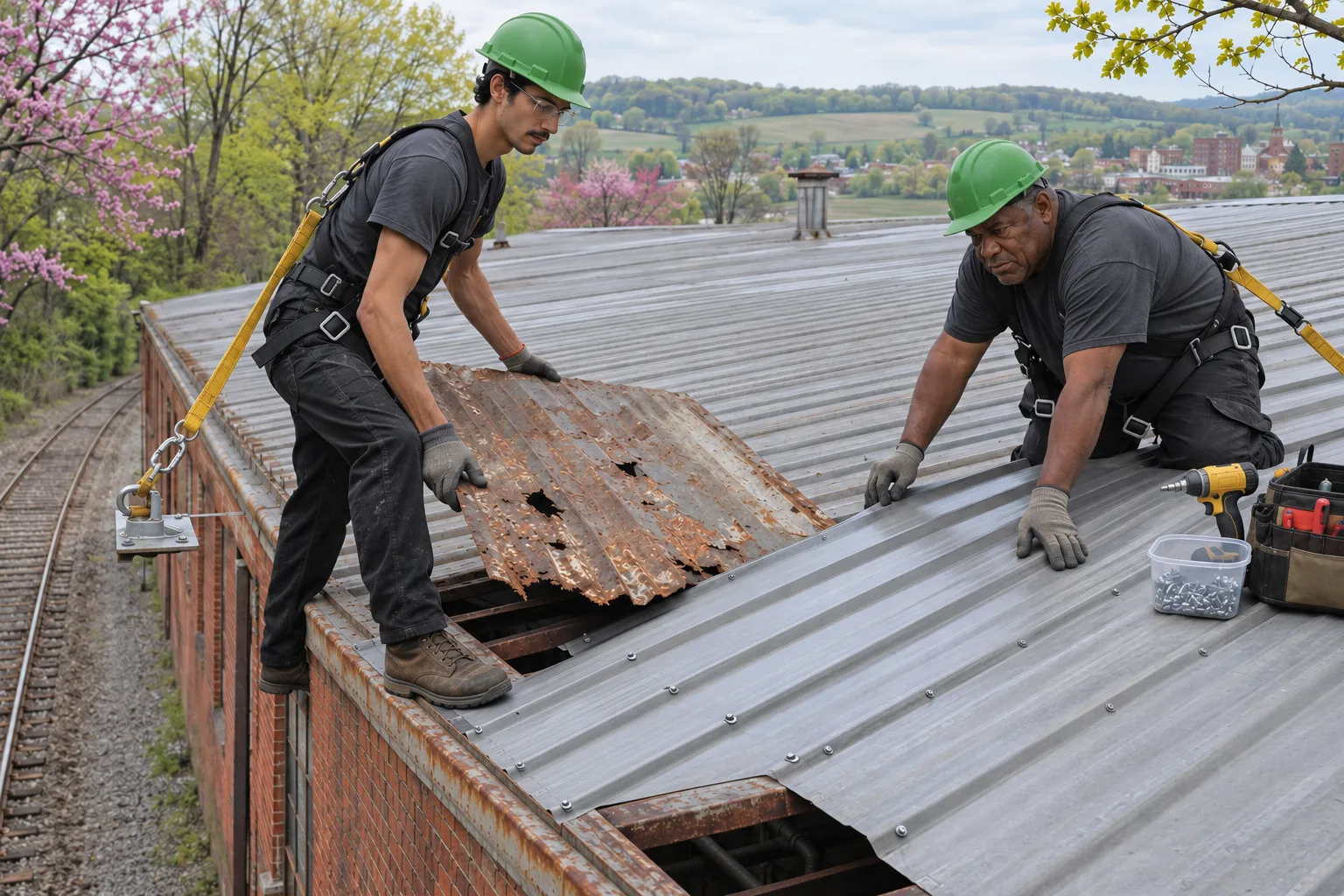
Metal additions and shop roofs beside your flat section, with loose screws or rusted laps.
Commercial metal roof repair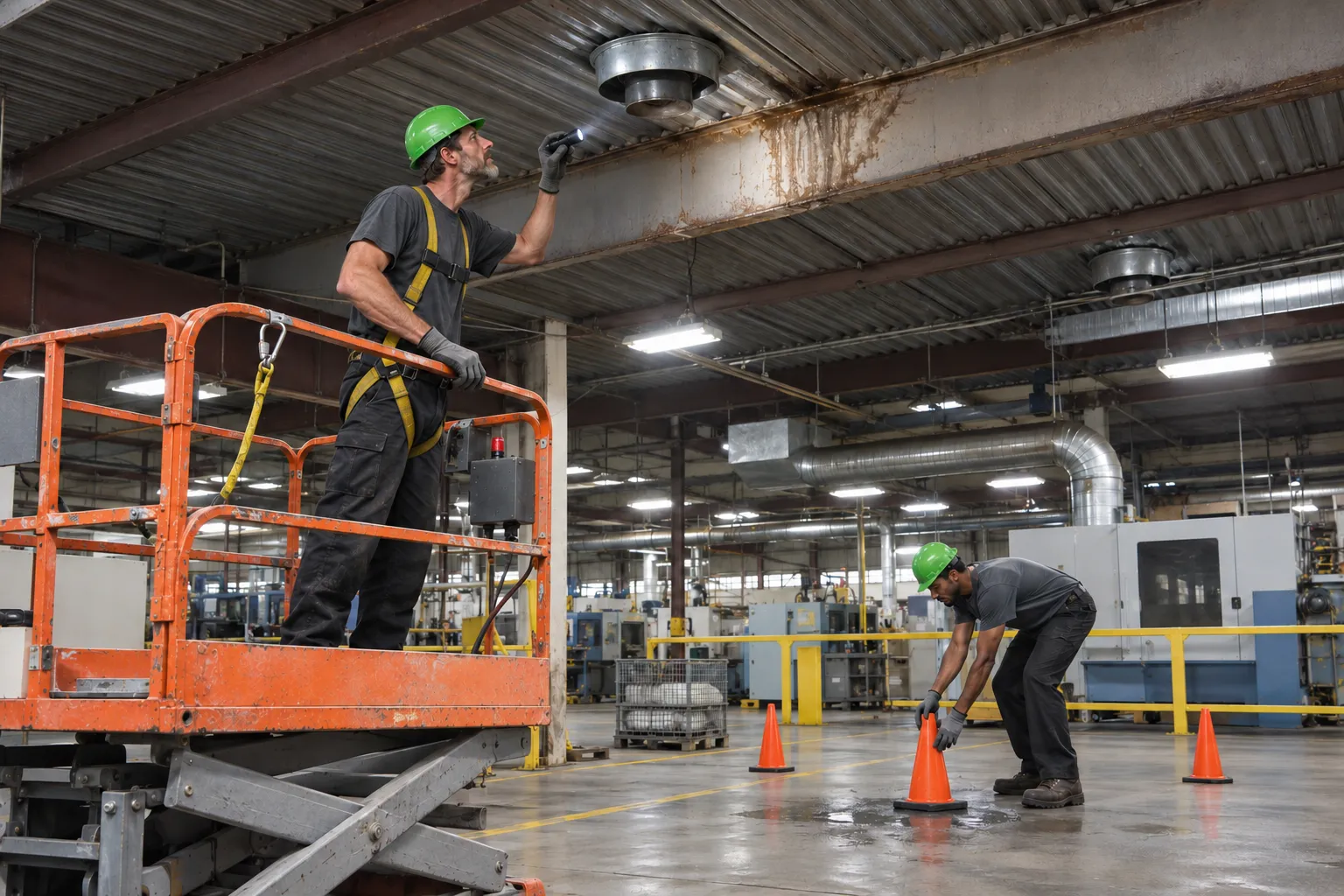
Stains inside the building that line up with no damage you can see up top.
Commercial roof leak repair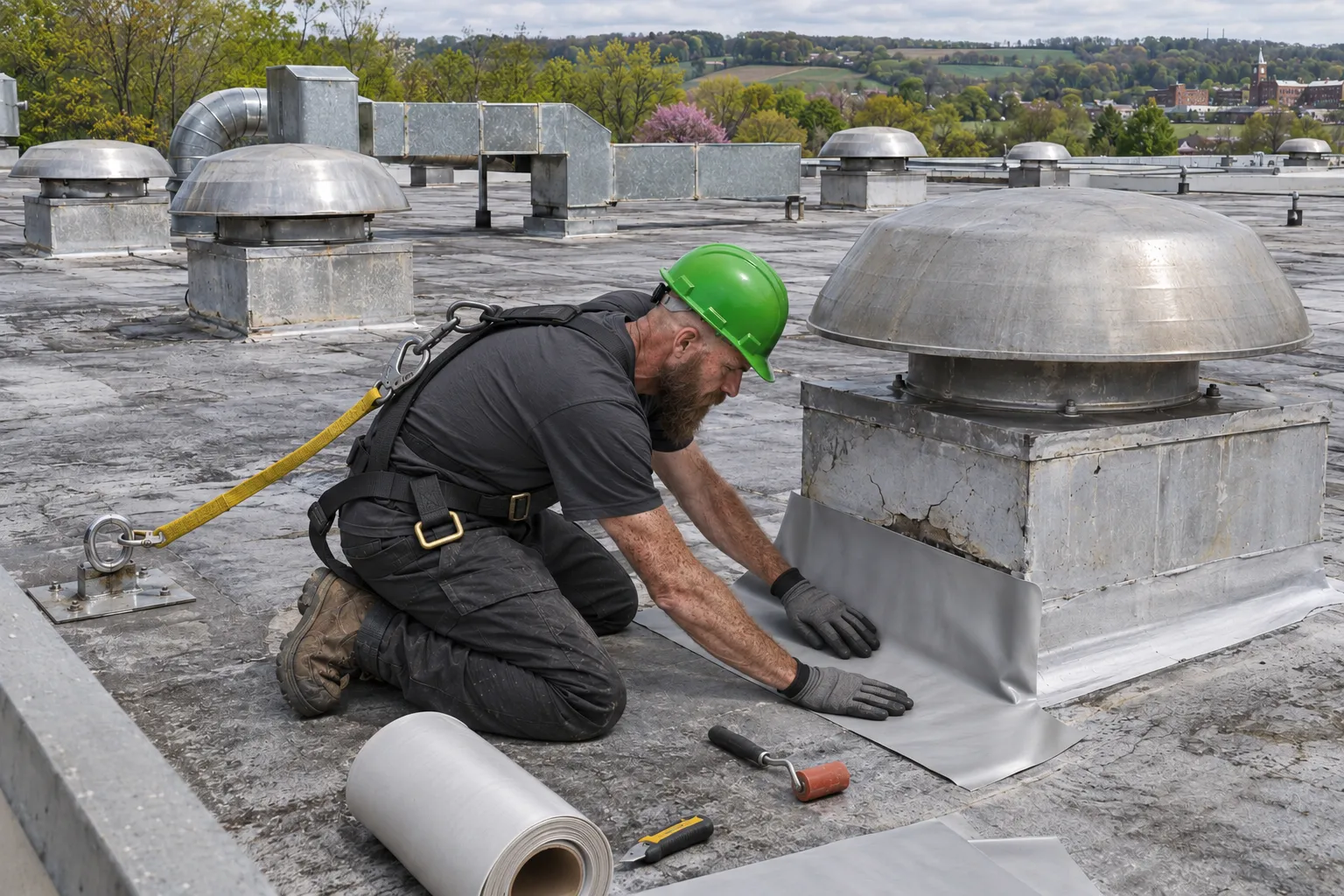
Plant roofs where fans, stacks, and pipe supports break through the flat membrane.
Industrial roof repair in RichmondQuestions owners ask before we repair a low-slope roof.
Heavy rain raises the water level on the roof until it reaches a weak spot, such as low wall flashing or an opened seam near a drain. Light rain drains off before it gets that high, so we check flashing heights and drain flow first.
A patch welded or adhered to clean, dry membrane lasts as long as the roof around it. Patches over wet insulation or dirty membrane fail early, which is why we read moisture and prime the surface before patching.
Yes for most leak stops and drain work. Welded TPO and PVC repairs go on in cold weather, while adhesives and coatings that need warmth wait for a milder day, and we tell you which repair your roof needs.
Only around the damage. We cut out wet or failed material back to dry, firm roof and tie new membrane into it, leaving the rest of the roof in place.
TPO, EPDM, PVC, built-up, and modified bitumen roofs on offices, stores, churches, schools, and plants. Each gets patched with its own material so the repair bonds and moves with the roof.
Tell us where water stands or drips. We will find the low spot and the opening and price the fix.