Sealant Age
Skylight Frame Leaks
- You See
- Drips at the edge of a skylight, worse in wind-driven rain.
- What It Means
- Frame sealant and gaskets dry out. Resealed frames and new curb flashing close the gap.
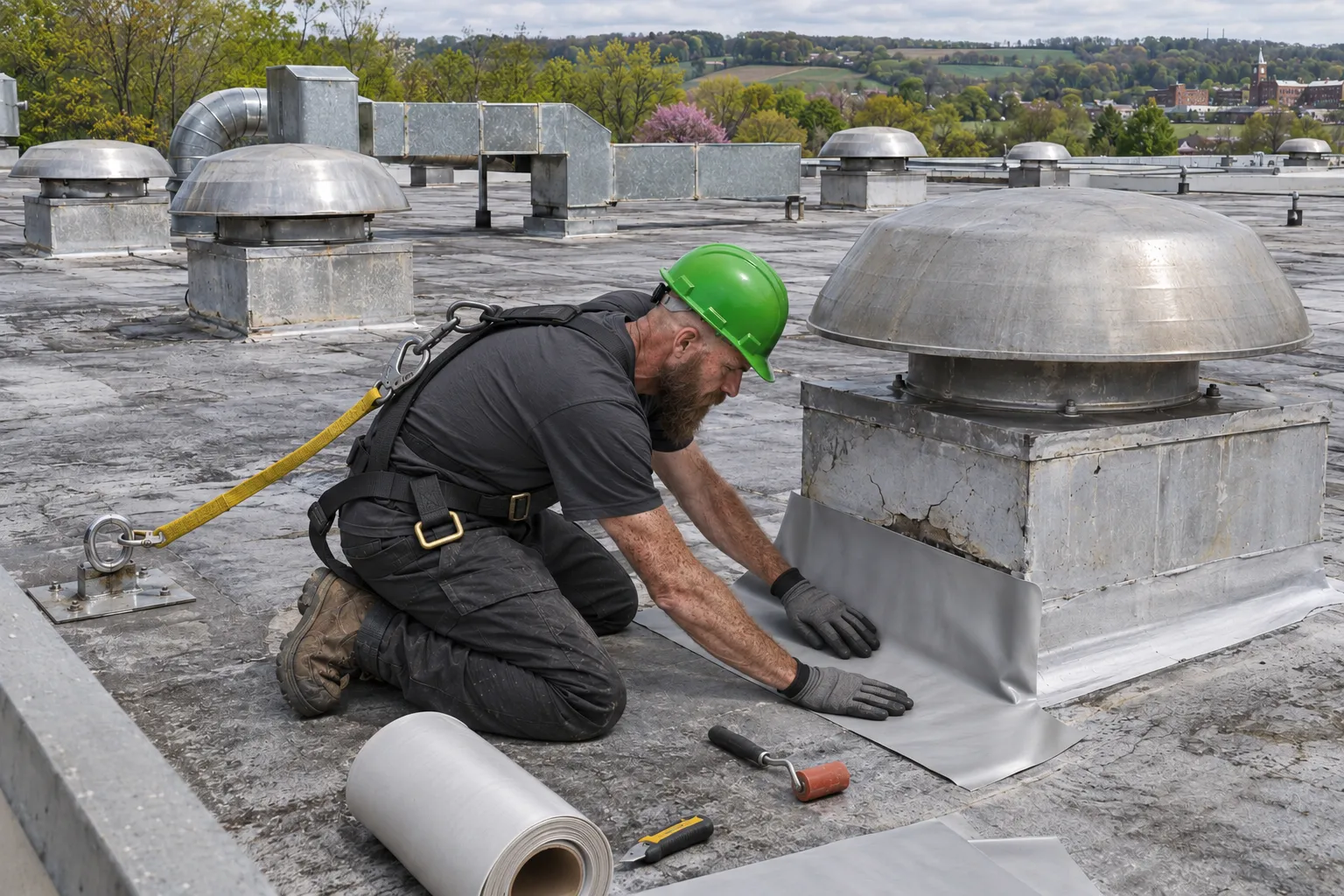
Winchester commercial roof repair often comes down to penetrations: we reflash skylights, roof hatches, pipe boots, and vents where they pass through the membrane.
Winchester commercial roof repair on shops and plants usually starts at the openings cut through the roof for light, access, air, and pipes.
Each skylight, hatch, vent, and pipe is a hole in the membrane closed only by its flashing. Flashing ages faster than the field of the roof, so penetrations leak long before seams do.
We check every one on the roof, not only the one above the stain, and reseal or reflash the weak ones in the same visit.
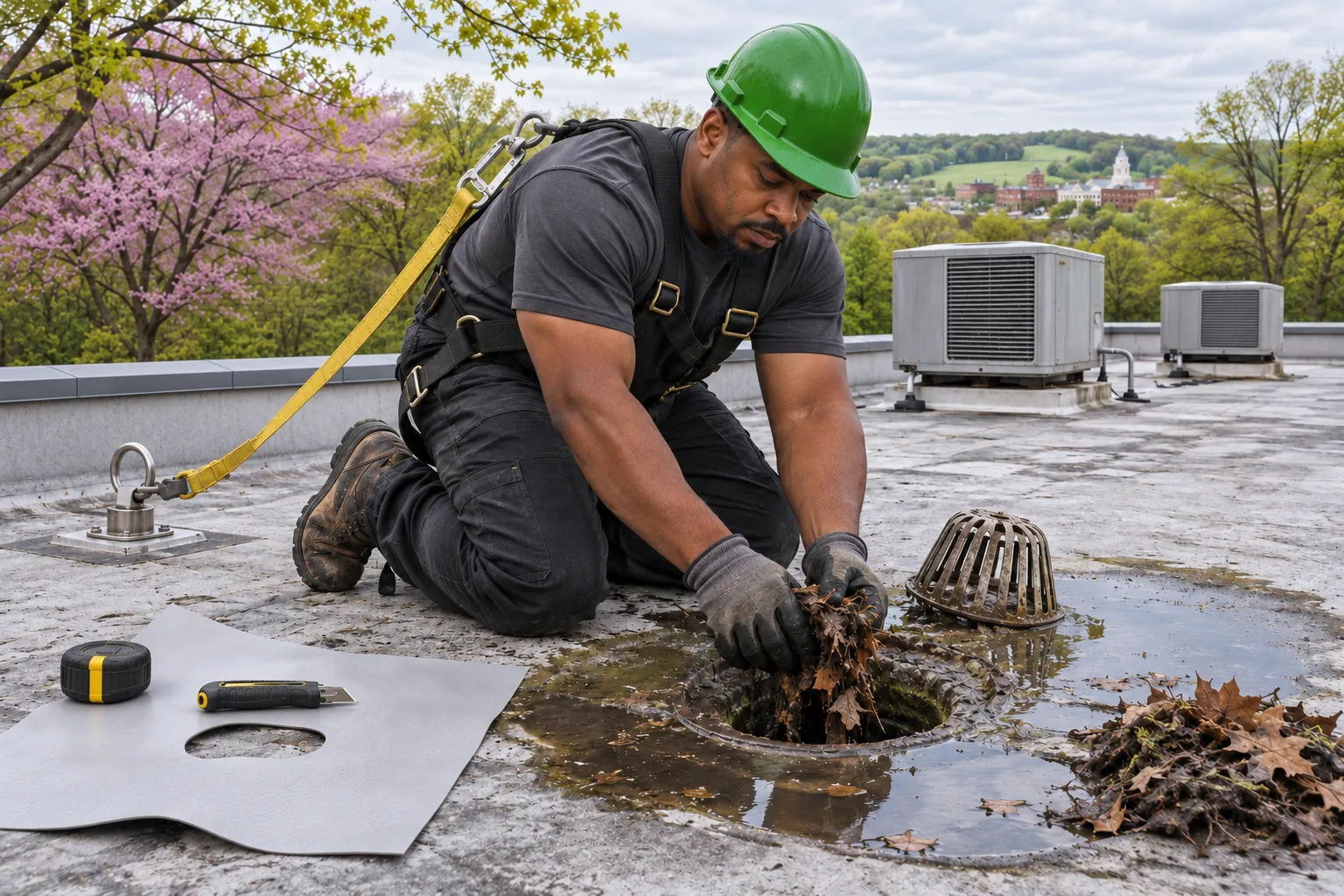
Penetrations leak in predictable ways, each tied to the part that wore out.
Sealing every opening at once keeps the next leak from appearing a few feet away.
Resealed skylights keep daylight in and water out of the rooms below.
A tight hatch keeps the ladder and floor below dry for service techs.
New boots stop drips beside plumbing and vent lines inside.
Secured fan curbs stop vibration from cracking the flashing again.
Removing abandoned curbs takes extra openings off the roof for good.
Checking every penetration at once avoids a return trip next storm.
A photo list of each opening shows its condition for future checks.
Stopping leaks at openings keeps water out of the boards around them.
Each type of opening has its own repair method.
Old sealant comes out, frames get resealed, cracked panels replaced, and curb flashing rebuilt to the membrane.
New gaskets seal the lid, and the curb gets fresh flashing run up its sides and terminated under the cap.
Split boots come off and new boots or flashing collars get sealed to the membrane around each pipe.
Unused curbs and pipes come out, the deck gets patched, and the membrane gets closed over the old hole.
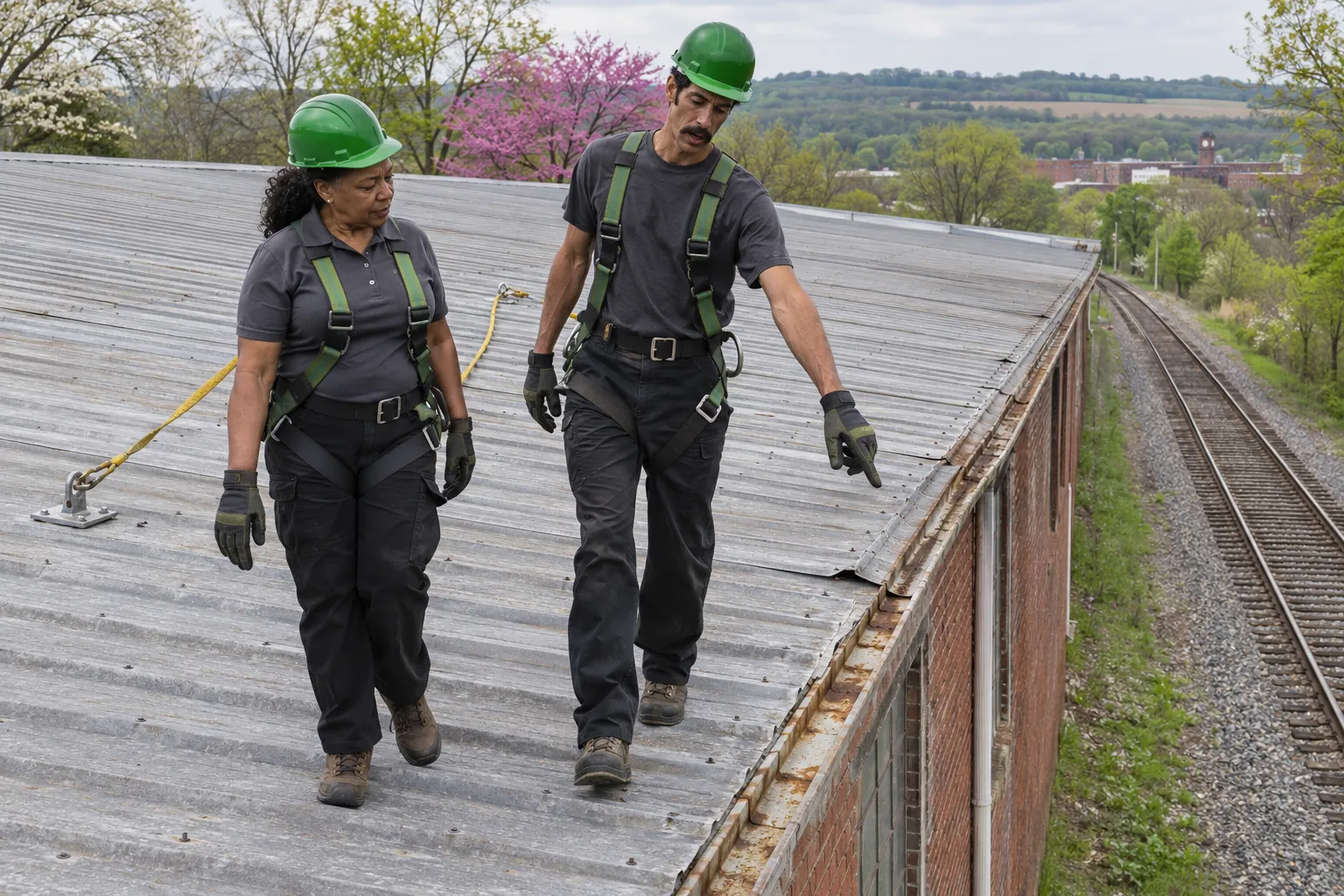
Tell us which opening sits above the drip. We will check that one and every other penetration on the roof.
Schedule Free InspectionPenetration repairs follow a count-and-check routine so none gets missed.
We mark where water lands and which skylight, hatch, pipe, or unit sits nearest above it.
Up top, each opening gets numbered, photographed, and checked for cracked boots, dry sealant, and loose curbs.
The written list prices each penetration repair so you can see which ones matter most.
Weak boots, curbs, and frames get rebuilt, and abandoned openings get removed and patched.
After the next rain, the repaired openings and the rooms below get checked again.
Is the building in one of our other towns? See the towns below; for anywhere else, call us or send us a message.
Plant and warehouse campuses with several roofs to keep dry.
Repairs get planned building by building.
Connersville commercial roof repairChurches, schools, and offices with roofs over occupied rooms.
Work dates fit services, classes, and office hours.
Rushville commercial roof repairCommercial and industrial roofs carrying layers of past repairs.
Each job adds to a written repair record.
Lawrenceburg commercial roof repairBuildings where a metal roof meets a flat roof section.
The transition flashing gets close attention.
Greendale commercial roof repairWhat Winchester owners ask about penetration leaks.
Penetration flashing tops the list, followed by seam and blister repairs on flat roofs, screw and lap repairs on metal roofs, and drain work where ponding formed. Freeze and thaw make all of them worse, so fall is a good time to fix them.
Ask whether they check every skylight, hatch, and pipe on the roof or only the one above the leak. Photos of each opening and a written price make bids easy to compare.
Each opening is priced on its own, based on its type, the damage, and whether insulation around it is wet. The free roof walk produces a list with a price per penetration.
Their flashing, boots, and sealant age faster than the membrane around them, and each one is a seam on all sides. Sun, vibration, and foot traffic around equipment speed that wear up.
Hatches that get opened often should have their gasket, hinges, and curb flashing checked twice a year. A tight hatch keeps water off the ladder and floor below.
Frames with solid curbs get resealed and reflashed. Skylights with cracked or clouded panels get new panels or a full unit when the frame itself has failed.
Every leftover curb or capped pipe is another hole relying on aging flashing. Taking it out and patching the deck removes a future leak point.
Tell us which opening sits above the leak. We will check every penetration on the roof and price the repairs.